4 years after i started blogging it didn't take my surprise to see claims like this. in fact, when i logged in this place and posted the first paragraphs i felt like i was doing something retro. i couldn't help doubting why i should repeat something i already gave up one year ago IN A GEOGRAPHICAL PLACE where i could by no means be noticed as much as back in my own city. in the future, i might criticise myself for diverting some thoughts from facebook on which i could actually be seen.
but it's more complicated than merely sharing thoughts and getting involved in social networks. meanwhile it's simpler than sharing. as i cannot convey my ideas precisely by handwriting anymore, various internet platforms have long been my draft papers. i own my bulletin board--which is chinese-based--and i post roughly-composed notes on facebook. it's simpler than sharing because what i ultimately need is a public space of storage and neither of the abovementioned media looks lovely. they're plain, wordpad-like and without webpage fun.
it's complicated at the same time. we know that you can import your blog into facebook notes. such an option might suggest a higher social function possessed by facebook than by blogs, especially blogs of people with no fame and no influential ideas, who just want their threads to be read and get some feedback. in this sense the 'changing nature' of blogging counts for the corner that 'non-influential' people encounter. ostensibly, blogging is still something distributed and de-centralised, but--i know nothing about how it goes in the western--in my countries, audience are being drawn to the recommended blogs highlighted on the home pages of blog services. for example, who would ever want to read a college student complaining his school demolishing a memorable building at the campus? maybe his classmates would, whilst none of the decision-makers would ever know that there have been some insightful critics posted in a personal journal. on the other hand, those recommended blogs might be more like personal logs than vehicles for public debates. i have read a range of 'recommended' ones that are vehicles for private affairs and emotional expressions of some famous free-lancers and writers. the only thing to be recommended seems to be a chance of peeking. which is not, by the way, since the authors get to manipulate what to conceal and what to publish.
then it's thinkable that bloggers without influence sought to share their concerns via a more distributed platform. within a space built to be a social network, such as facebook, you're no longer an island. you've been exposing yourself to a semi-exclusive group--if you're very, very careful about what to be published--and it might not hurt to share more.
to me, this is the complicated part. when i doubt myself for being too shy to share everything on facebook, i wonder how badly i want to invite comments on my pre-mature thoughts and posts. i do, really, but when it comes to the dilemma between totally open and completely secret, i need something buffering in between. in this buffering space there's no information about my school, my employer and my social circles. i write stuff as simultaneously an anonymous author and a (potential) friend of visitors. to put things on facebook implies that i'm actually hoping to catch my friends' eyes, whilst the posts here don't necessarily bear such social needs and functions.
31 October 2008

city as body and locating body in the city
http://www.bmj.com/cgi/content/full/322/7288/741

the other raining afternoon i was killing some waiting time at a secondhand bookshop and, as always, impulsively spending cash on some 'not-really-rare' stuff. in my defense, it is because i can't afford those 18-19C medical journals and that the excitement triggered by them must be released otherwise. then i found this book coinciding with my term paper on the topic of body/ space relationships in the (pre-) modern western medicine.
as the memories of my supervisor saying that 'you must be disappointed by the result... there's no necessary connection between the concept of city as a body and location of bodies in the city...' flashing back, it was embarrassing to recall that the periodization of my awkward term paper was in fact wrong. it was wrong not because there was a 'correct' option but due to my unsuccessful efforts devoted to dealing with some disjointed concepts at once. it might be too early to use the term disjointed, of course, since judging by the feedback i got, my efforts were not completely useless. a lack of case studies was however undermining my intended conclusion that surveillance of bodies had something to do with a seemingly well-circulating city in the 19C western europe.
to put it briefly, there were some sub-topics i tried to cover and the apparent mistakes i made:
1. translocation of patient bodies from streets, asylums and prisons to civil hospital and then to the anatomical table. which did happen, but in different ways, in the 19C paris and london.
where i was stuck in the variation of body-controlling factors such as the architecture, the bills and the professionalisation of medicine. also the objects, i. e. the bodies, were not well-defined according to the two different cultures.
2. high-speed and high-efficiency circulation of the city as a body. conception of such principles dated back to the 18C and, perhaps, were reinforced in the 19C in accordance with marxist ideas.
where i figured out a time lag between urbanisation of paris and british cities, but a single chapter was way too short for comparative study.
3. the idealistic rationality in control and direction of 'flows' in the city--flows of bodies and of air, traffic and services.
that is, i was trying to work on a very long period ranging from the 17C to early 20C. as a predictable result, without a central concern gluing all stuff together i drowned in all those urban history books--and did not survive.
4. disorder concealed behind orders.
this was perfectly beyond my ability... again when it was too short a paper to be covering both urban history and the history of medicine.
after all, whatever, it is over now. it is not over yet, however, because i'm still seeking other people's works that might fulfill my unfinished pursuit. to me it's like dealing with a jigsaw puzzle, when i pick up as many perspectives as i want in hope of exploring the whole picture. nonetheless i have no idea if this game is really leading somewhere. but when it is just a pastime rather than academic assignment, what's the problem with an extremely vague picture in mind?
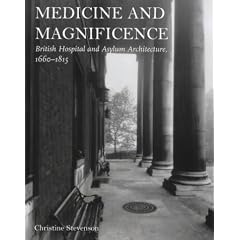
the other raining afternoon i was killing some waiting time at a secondhand bookshop and, as always, impulsively spending cash on some 'not-really-rare' stuff. in my defense, it is because i can't afford those 18-19C medical journals and that the excitement triggered by them must be released otherwise. then i found this book coinciding with my term paper on the topic of body/ space relationships in the (pre-) modern western medicine.
as the memories of my supervisor saying that 'you must be disappointed by the result... there's no necessary connection between the concept of city as a body and location of bodies in the city...' flashing back, it was embarrassing to recall that the periodization of my awkward term paper was in fact wrong. it was wrong not because there was a 'correct' option but due to my unsuccessful efforts devoted to dealing with some disjointed concepts at once. it might be too early to use the term disjointed, of course, since judging by the feedback i got, my efforts were not completely useless. a lack of case studies was however undermining my intended conclusion that surveillance of bodies had something to do with a seemingly well-circulating city in the 19C western europe.
to put it briefly, there were some sub-topics i tried to cover and the apparent mistakes i made:
1. translocation of patient bodies from streets, asylums and prisons to civil hospital and then to the anatomical table. which did happen, but in different ways, in the 19C paris and london.
where i was stuck in the variation of body-controlling factors such as the architecture, the bills and the professionalisation of medicine. also the objects, i. e. the bodies, were not well-defined according to the two different cultures.
2. high-speed and high-efficiency circulation of the city as a body. conception of such principles dated back to the 18C and, perhaps, were reinforced in the 19C in accordance with marxist ideas.
where i figured out a time lag between urbanisation of paris and british cities, but a single chapter was way too short for comparative study.
3. the idealistic rationality in control and direction of 'flows' in the city--flows of bodies and of air, traffic and services.
that is, i was trying to work on a very long period ranging from the 17C to early 20C. as a predictable result, without a central concern gluing all stuff together i drowned in all those urban history books--and did not survive.
4. disorder concealed behind orders.
this was perfectly beyond my ability... again when it was too short a paper to be covering both urban history and the history of medicine.
after all, whatever, it is over now. it is not over yet, however, because i'm still seeking other people's works that might fulfill my unfinished pursuit. to me it's like dealing with a jigsaw puzzle, when i pick up as many perspectives as i want in hope of exploring the whole picture. nonetheless i have no idea if this game is really leading somewhere. but when it is just a pastime rather than academic assignment, what's the problem with an extremely vague picture in mind?
28 October 2008
the pattern
just realised that tomato stalks, my lower eyelashes and sea stars look alike.
wondering why.
wondering why.
the equinox
not until the septempber equinox did i recognise the falling leaves who appeared to be in a rush. they chased a sudden wind so hard that they left the trees behind. it was in a town where i expected to feel the very autumnal phenomena but ended up with mild disappointment. then i changed my mind, for the leaves had done what they were meant to do exactly on the right day.
they were waiting for the right moment, that i realised. then i got satisfied.
now i am here in a town where i spent most of autumns in my life. as it is in october, the air is surprisingly humid and the autumn seems to be not ready to hit the city. also surprisingly that the scary part of autumn fades away and the cheerful part remains and grows. shamelessly, i would reckon this as the evidence of me growing up.
they were waiting for the right moment, that i realised. then i got satisfied.
now i am here in a town where i spent most of autumns in my life. as it is in october, the air is surprisingly humid and the autumn seems to be not ready to hit the city. also surprisingly that the scary part of autumn fades away and the cheerful part remains and grows. shamelessly, i would reckon this as the evidence of me growing up.
dedicated to the stupidity in our world
i'm totally amused by the movie burn after reading.
i've always been into such "disastrous lives of fools" stories but seldom satisfied with those suggesting irony and, sometimes, the sharpness of the storytellers. i consider that the smarter you are the less you're obliged to tell the audience how insightful you could get. seemingly a simplest point, but spoilt by a number of productions.
the trailer
i've always been into such "disastrous lives of fools" stories but seldom satisfied with those suggesting irony and, sometimes, the sharpness of the storytellers. i consider that the smarter you are the less you're obliged to tell the audience how insightful you could get. seemingly a simplest point, but spoilt by a number of productions.
the trailer
[candidate disciplines wanted]
requirement:
1. a CV listing all identities that scientists, sociologists and historian had ever recognised.
2. a proposal describing how you will conduct your power, including the pedagogical system and training programmes you will implement.
3. plans for the design of your buildings, which must be in a form that can be reproduced elsewhere.
4. two recommendations: one from a historian and one from a sociologist. NOTE: recommendation from scientists will not be accepted.
1. a CV listing all identities that scientists, sociologists and historian had ever recognised.
2. a proposal describing how you will conduct your power, including the pedagogical system and training programmes you will implement.
3. plans for the design of your buildings, which must be in a form that can be reproduced elsewhere.
4. two recommendations: one from a historian and one from a sociologist. NOTE: recommendation from scientists will not be accepted.
vegetarian metaphors.
n my last night dream i was dealing with this huge pumpkin. as a completely beginner in pumpkin recipe, i had all the processes imaginary. i was peeling it over a whole sink of boiling water, feeling like if i was shedding the skin of a human head.
don't take it wrong. i have no experience in peeling human head. dreams do not always come from empirical memories.
then i cut it in half carefully. one side of it was weirdly smooth and the other side was full of seeds. those seeds were huge, too. so huge that the arrangement of them was like a monster coral spreading inside this half pumpkin. i turned this half around to avoid the physically sick feelings it triggered, but i could not help turning it back to observe those seeds. i almost cursed my involuntary behaviour.
it was a sunny day in the dream. the sunlight sparked on the pumpkin halves and i found myself stuck in a situation that might get worse if i left the pumpkin there--it might turn alive. i did not mind it turning alive as a whole. just turning alive as two halves with uneven seeds would be too much.
i was afraid of seeing the seed-filled half starting running. it seemed to have no idea that once it moves the seeds--or its brain--would fall off all over my kitchen.
don't take it wrong. i have no experience in peeling human head. dreams do not always come from empirical memories.
then i cut it in half carefully. one side of it was weirdly smooth and the other side was full of seeds. those seeds were huge, too. so huge that the arrangement of them was like a monster coral spreading inside this half pumpkin. i turned this half around to avoid the physically sick feelings it triggered, but i could not help turning it back to observe those seeds. i almost cursed my involuntary behaviour.
it was a sunny day in the dream. the sunlight sparked on the pumpkin halves and i found myself stuck in a situation that might get worse if i left the pumpkin there--it might turn alive. i did not mind it turning alive as a whole. just turning alive as two halves with uneven seeds would be too much.
i was afraid of seeing the seed-filled half starting running. it seemed to have no idea that once it moves the seeds--or its brain--would fall off all over my kitchen.
starting over.

i've never been a new blogger for these years, yet this would be the first time i started a blog somewhere outside the chinese-speaking world and i feel like i was new. right, it is obviously true that physical and geographical locations mean nothing more than my user IP within such a space. i'm however excited about me being 'new'. could we say that the surroundings have nothing to do with the mental state? if not, then it is quite natural that when i'm sitting here typing, recognising that i'm geographically located in a place where i've never blogged, i see myself as a blogger differently.
the other reason for me to call myself new is the language i'm about to use. i've been writing some notes in english--as you'll see when they're imported here--on facebook. i do that just because there are so many threads in my head coming out in english, despite the bad grammar that might be inherent in my sentence composing. also i didn't assume whom i was speaking to and whom i'm not. but now things are different: i don't see chinese-speaking people visiting my blog a lot, though i hope they do. that is, i'm voluntarily creating a space wherein the virtual landscapes are to be built in english.
as the celebration for a start, i'd post this photo. they were once my pets, the cells i've struggled to maintain well and the cells who collaborated with me on my scientific projects. they were young, new and about to grow to 100 % confluence. and of course, this doesn't mean that i'm crazily stuffing this blog as they filled the dish.
Subscribe to:
Posts (Atom)
